Patented technology behind how Thanis reviews writing.
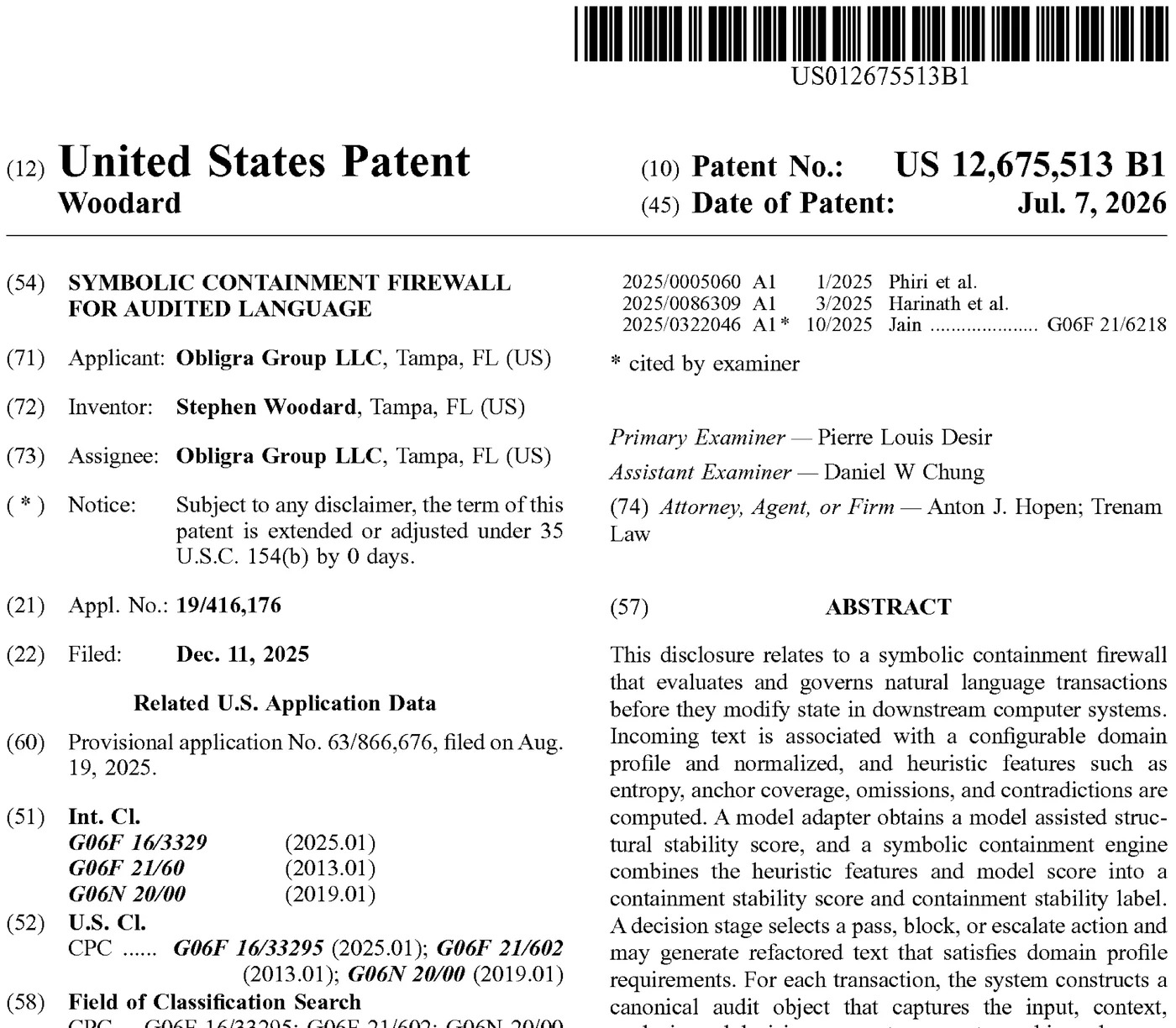
U.S. Patent No. 12,675,513 B1 describes a system for reviewing language against defined requirements, scoring the result, explaining why, and preserving a record that can be checked later. Thanis applies those ideas to writing review.
- Patent
- US 12,675,513 B1
- Issued
- July 7, 2026
- Assignee
- Obligra Group LLC
- Inventor
- Stephen Woodard
Official title: “Symbolic Containment Firewall for Audited Language.”
- 22
- Pages
- 20
- Claims
- 8
- Drawing sheets
- 8
- Patent figures
The issued patent documents the system through architecture diagrams, review flows, scoring logic, structured records, decision paths, and verification.
The model is one part of the review.
Figure 1 places the language model inside a larger review system. The draft carries context, moves through structured analysis, and produces a defined result rather than relying on the model alone.
Thanis Studio starts with your draft and the kind of review you want. Instead of returning an open-ended chat response, Thanis organizes the feedback into a consistent review.
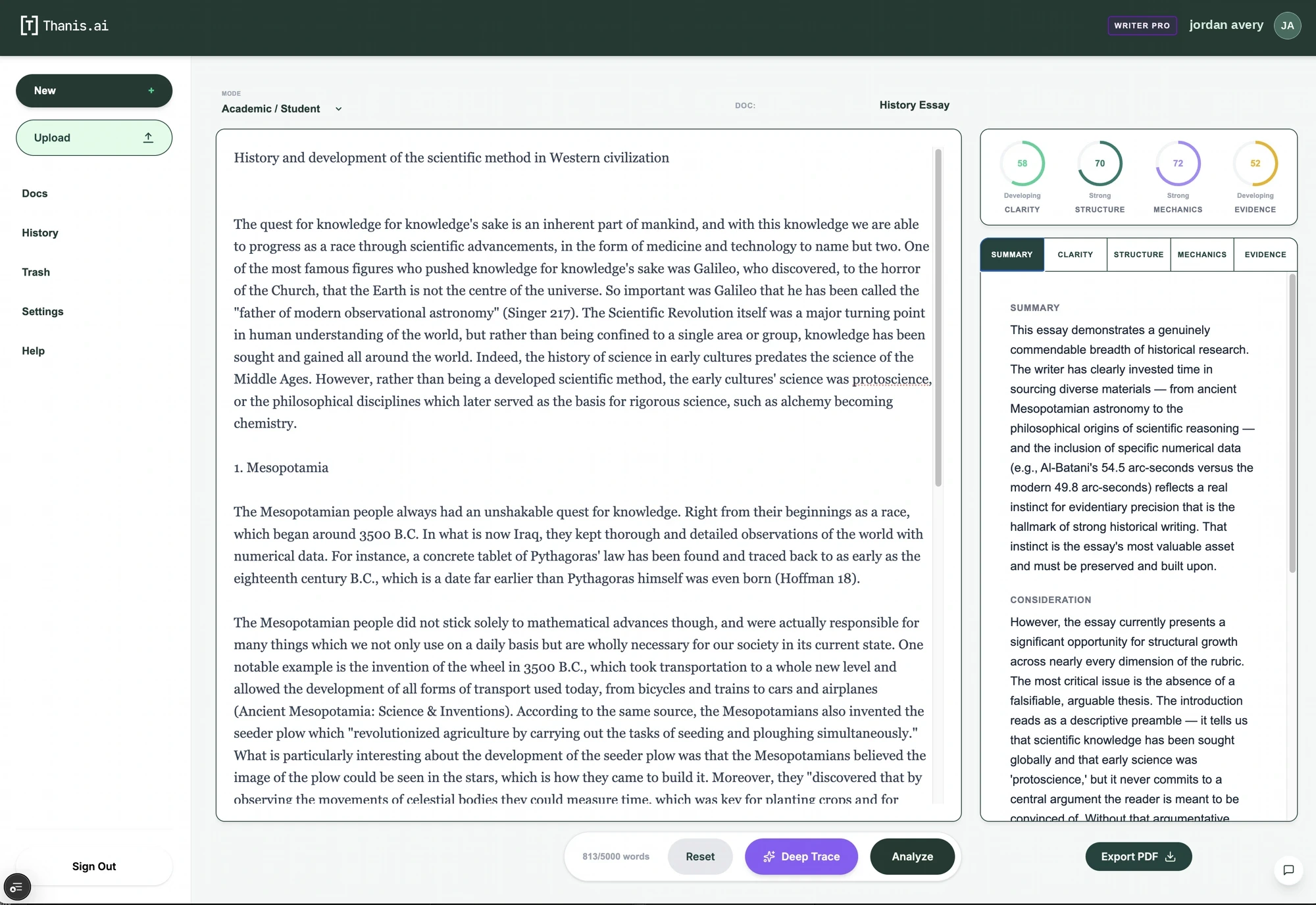
“The quest for knowledge for knowledge's sake is an inherent part of mankind, and with this knowledge we are able to progress as a race through scientific advancements…”
- Review
- Academic
- Result
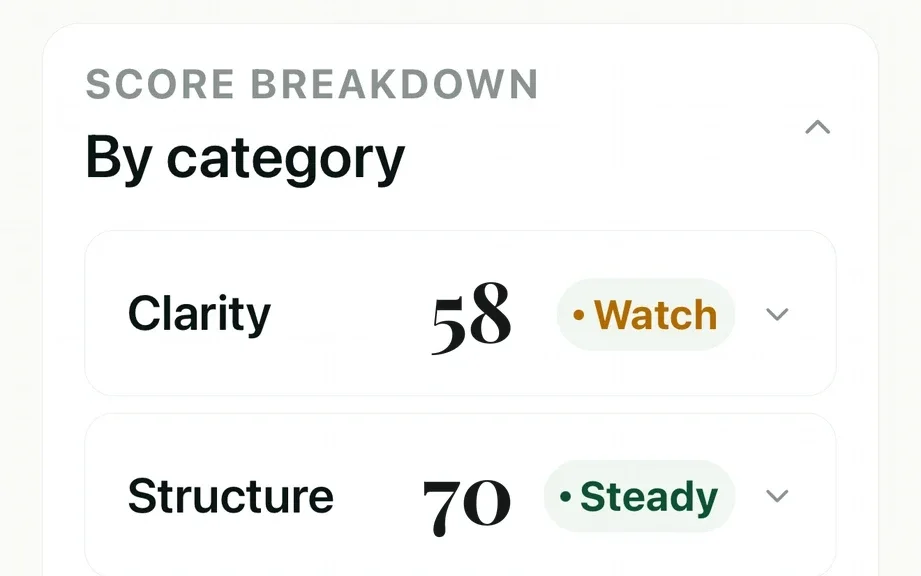
- Category scores — Clarity 58, Structure 70, Mechanics 72, Evidence 52 — with a written summary.
- Revision priority
- The most critical issue is the absence of a falsifiable, arguable thesis.
From draft to feedback you can use.
Figure 3 follows the review from the draft and its context through analysis, scoring, explanation, a decision, and a recorded result.
Thanis shows you how the draft scored, why it received those scores, and what deserves attention first.
“Social media has had a major negative effect on student achievement.”
- Category
- Evidence
- Observation
- The claim is broad and needs support.
- Revision focus
- Add evidence or narrow the claim to what your sources establish.
Different writing gets a different review.
Figure 4 describes different review requirements for different kinds of language. A research paper, a creative draft, and an executive memo do not need the same kind of review. The patent calls these sets of requirements domain profiles.
Thanis applies the broader idea through three review experiences, each with its own requirements.
Academic reviews the assignment, rubric, evidence, structure, mechanics, and clarity before submission.
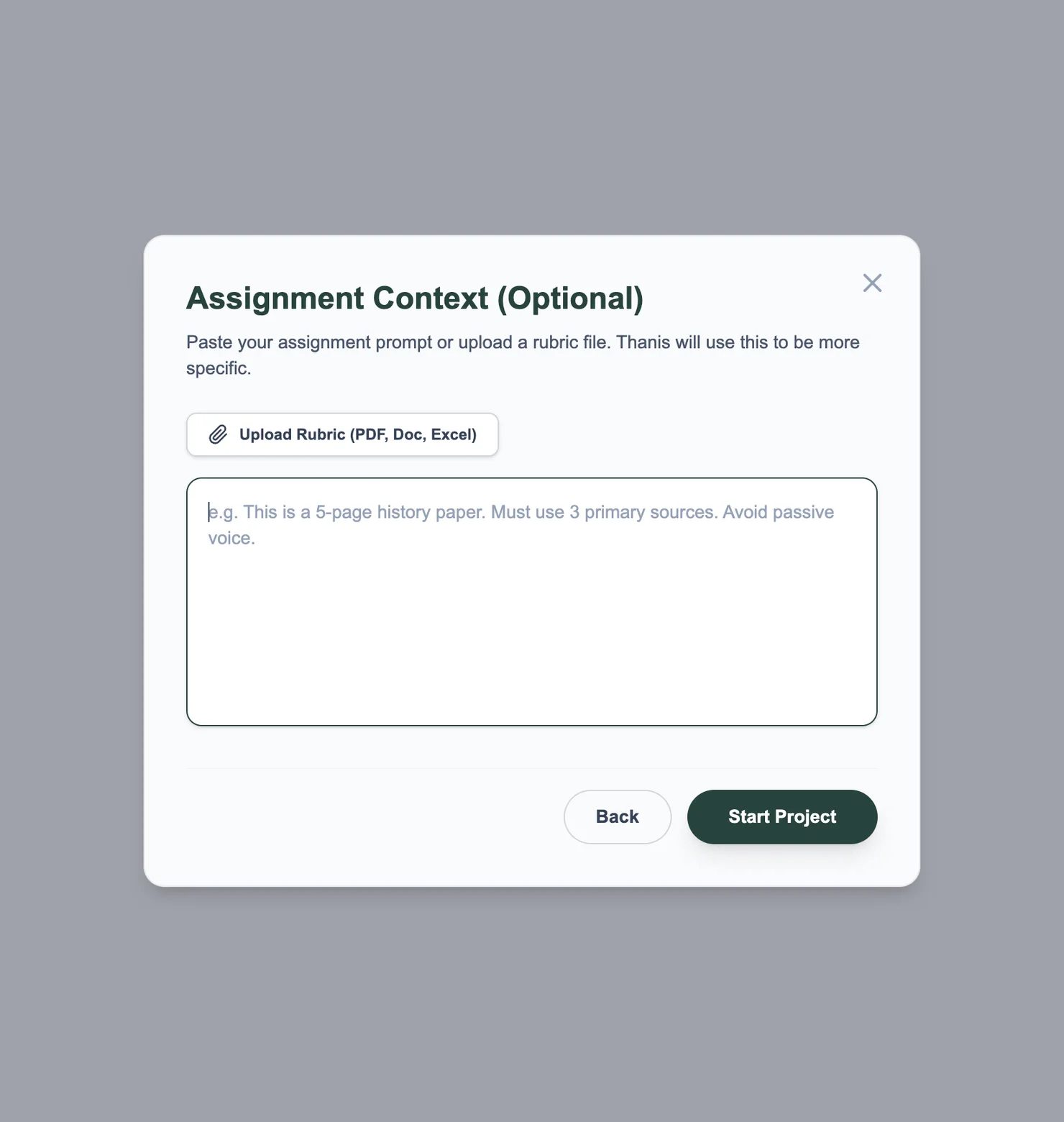
The assignment and rubric become part of the review.
Writer Pro reviews structure, pacing, tone, and where the draft loses momentum.
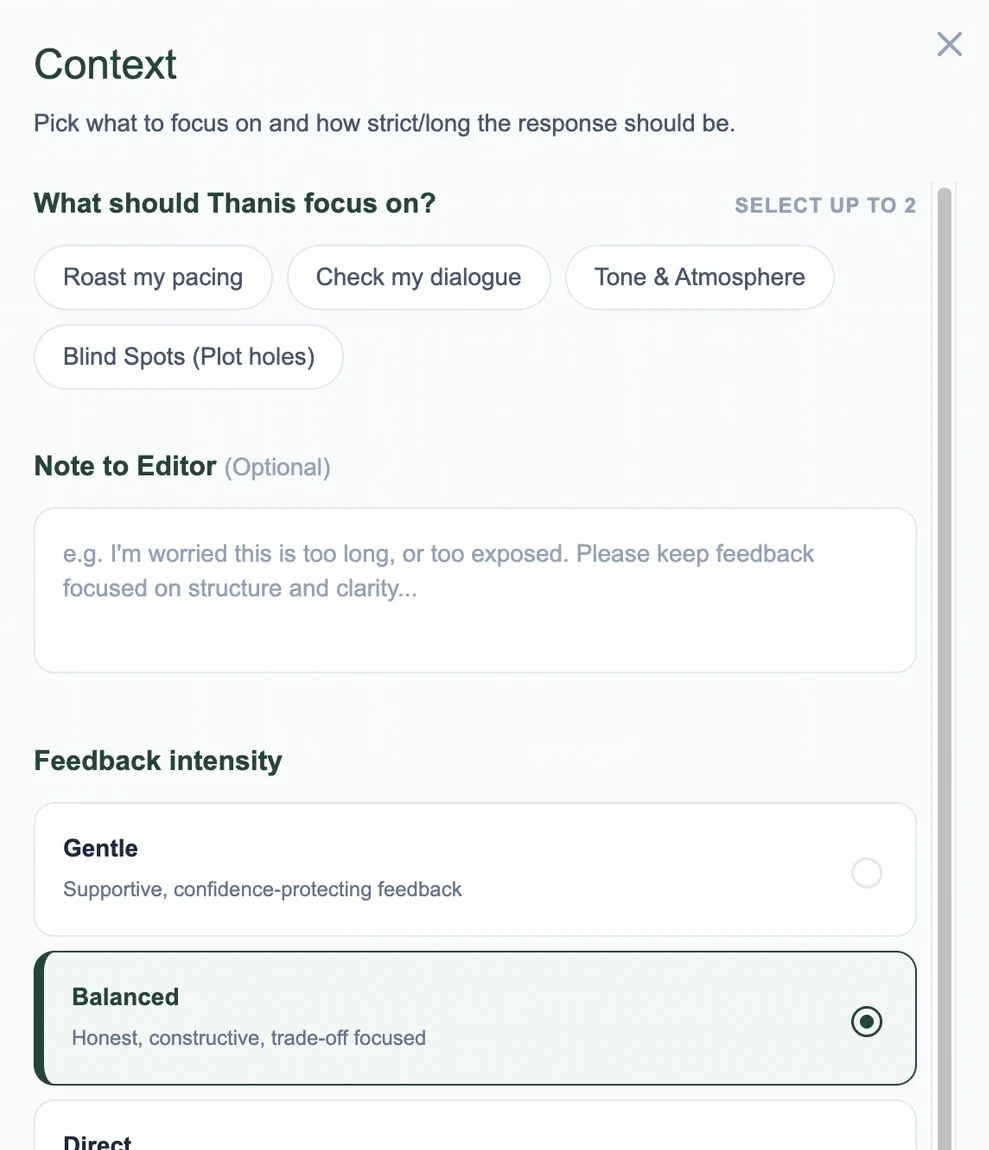
You choose the focus, style, and depth of the review.
Executive reviews assumptions, recommendation strength, reasoning, risk, and ownership.
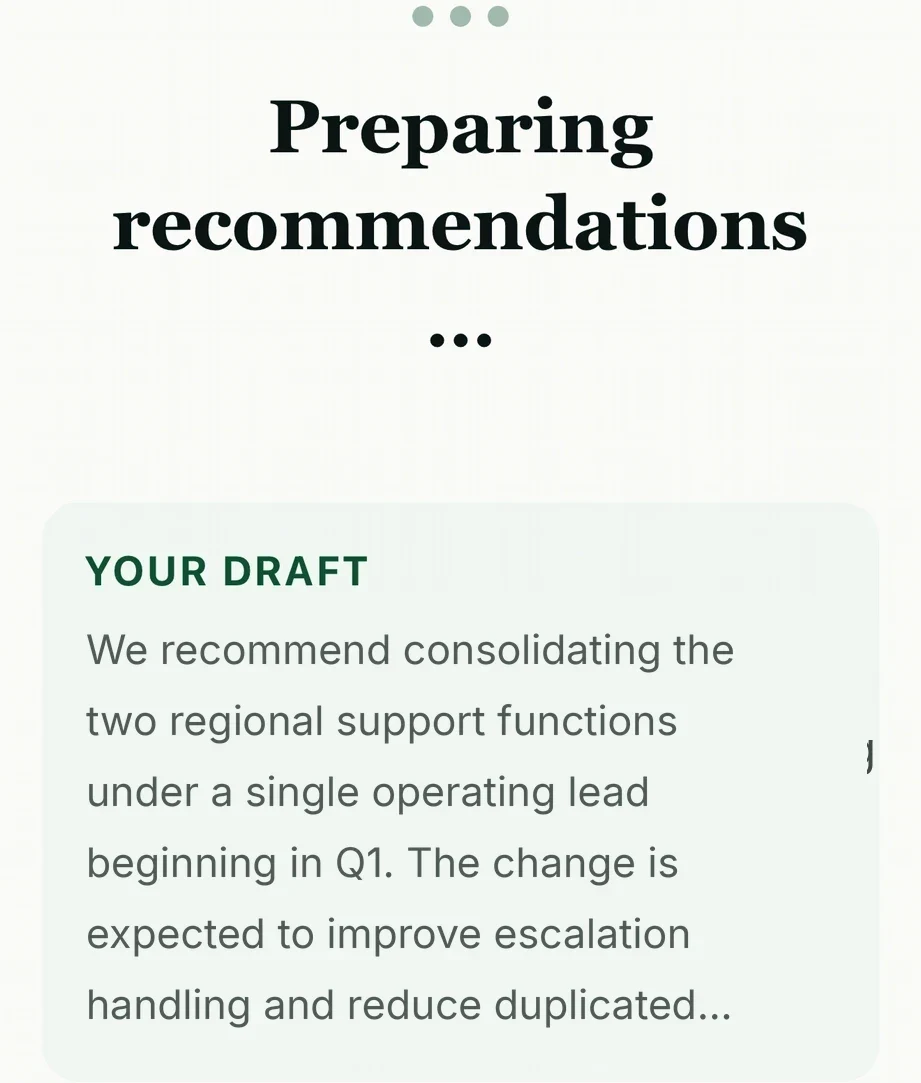
The draft is a recommendation, so the review reads it that way.
This patent concept appears in Thanis through mode-specific review. The modes themselves are product experiences, not separately patented features.
“The policy was clearly ineffective because student performance declined.”
The sentence makes a causal claim. Show the evidence that connects the policy to the decline, or narrow the claim.
“She walked into the room and looked around. Everyone was quiet. She sat down and waited.”
The sequence uses several similar actions in a row. Decide which detail carries the tension and give that moment more space.
“We expect the program to deliver $8 million in savings next year.”
The projection depends on assumptions that are not stated. Identify what has to be true for the savings target to hold.
You decide what changes.
The patent allows a review system to reflect on a result and, in some implementations, produce revised language.
Thanis makes a deliberate product choice: it gives you the recommendation and the reasoning, then leaves the rewrite to you.
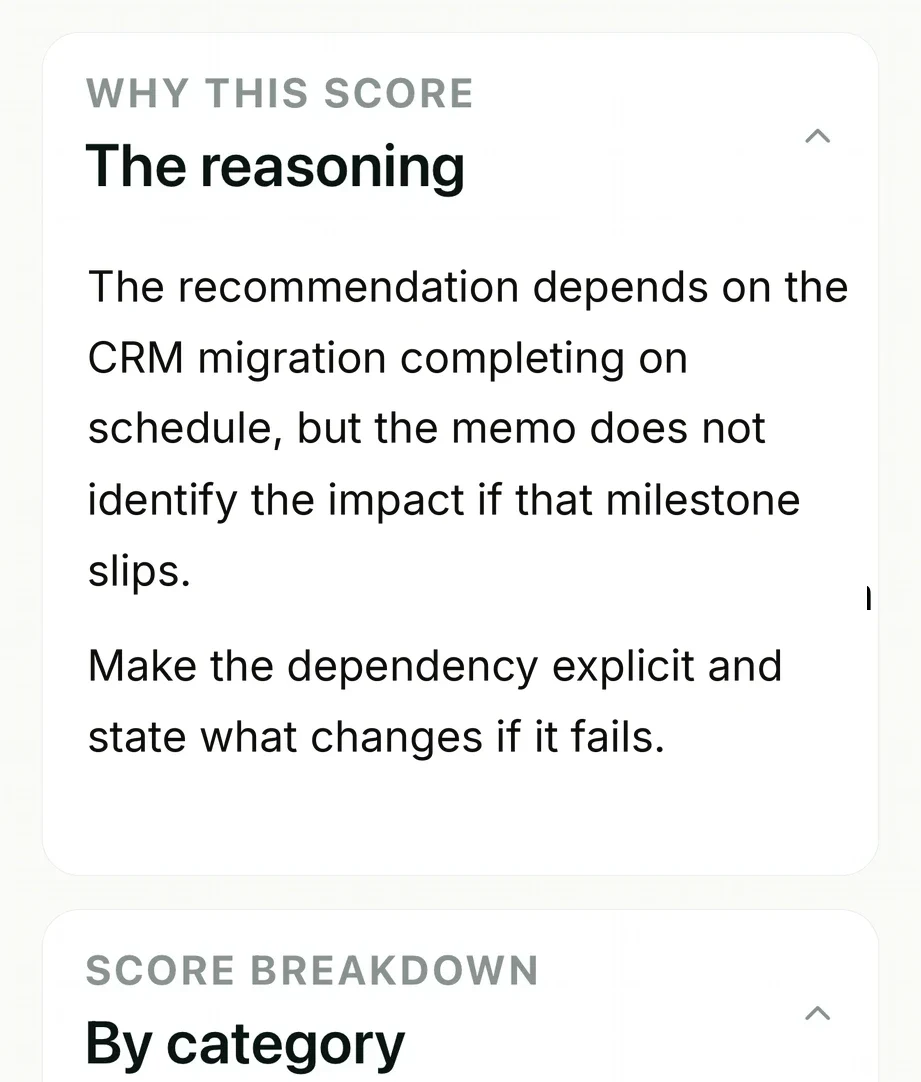
“We'll make the call on the vendor and still hit the launch date.”
- Recommendation
- Clarify who owns the decision and what happens if the deadline slips.
You decide what changes and how to write it.
From the patent to Executive review.
Figure 7 applies the system to a governance message. The draft makes an unconditional guarantee but leaves out important policy and risk context. The system flags the problem, reviews a revised version, scores it again, and records the final result.
Thanis Executive applies that broader idea to leadership communication by surfacing assumptions, recommendation strength, weak reasoning, risk, and unclear ownership before the message moves forward.
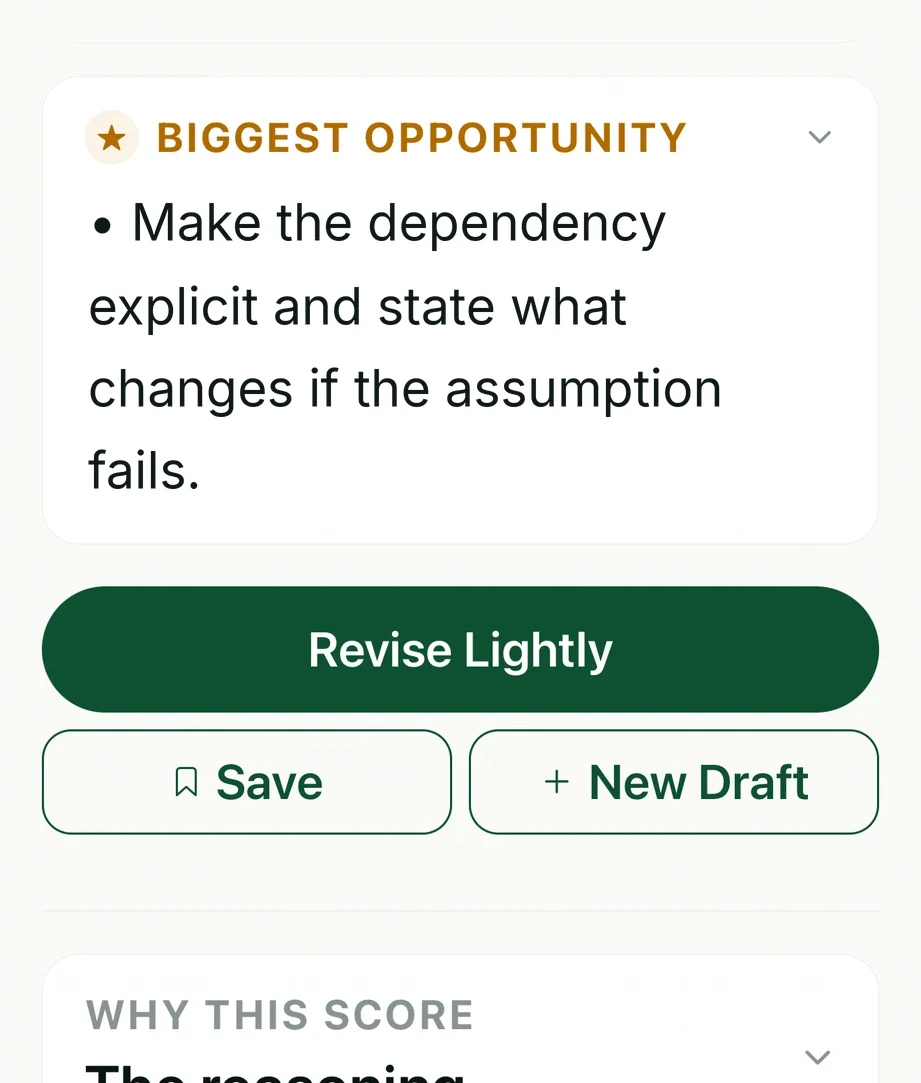
“We guarantee the rollout will remain on schedule and within budget.”
- Critical assumption
- The statement depends on delivery milestones and cost assumptions that are not stated.
- Revision focus
- State the dependencies and what changes if they are missed.
A review you can return to.
The patent treats the review as a structured record rather than a temporary model response. It also describes mechanisms for checking the integrity of that record later.
Thanis lets you save reviews and return to your work through History.
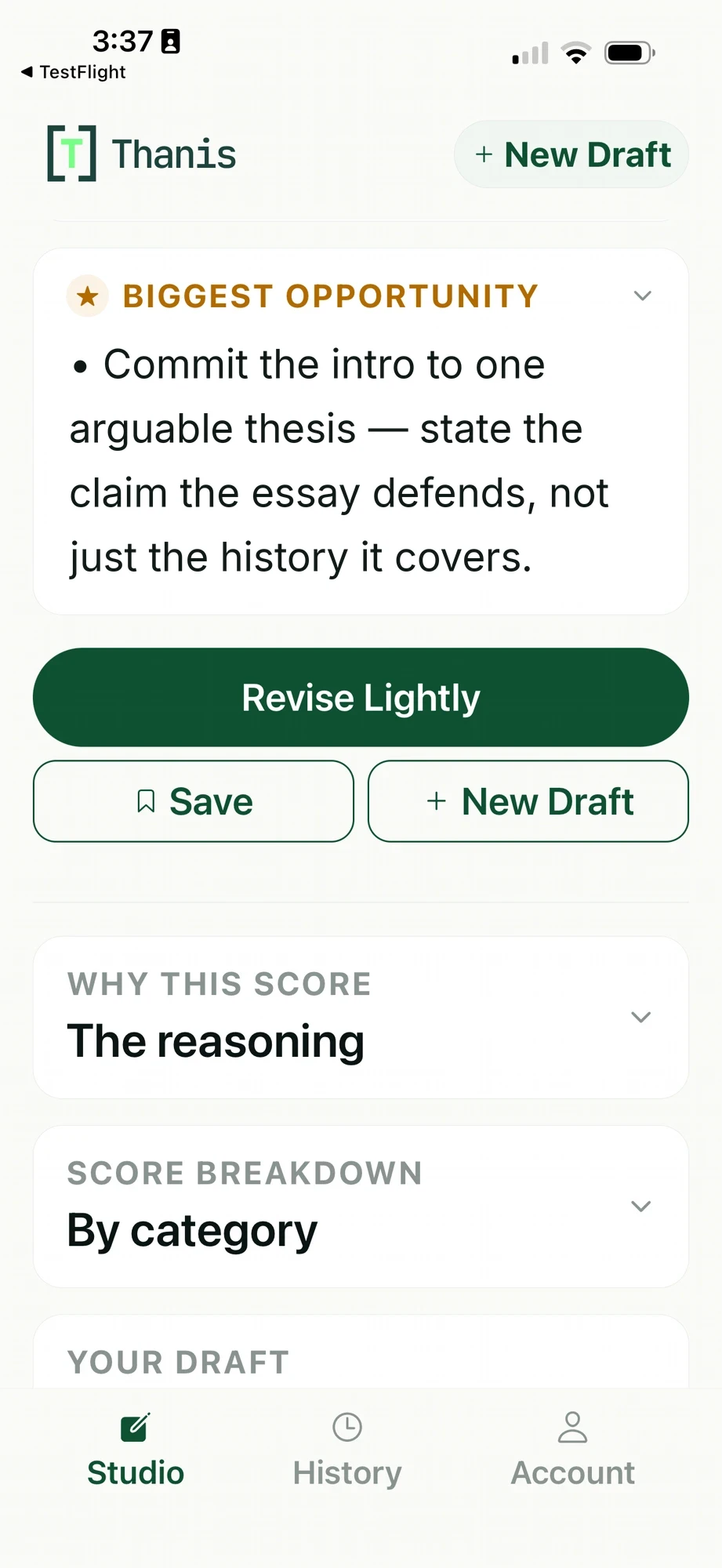
- Draft 1
- Review saved
- Draft revised
- Return through History
The patent describes additional integrity and verification mechanisms beyond the user-facing History experience shown here.
The patent, on record.
- Patent
- U.S. Patent No. 12,675,513 B1
- Title
- Symbolic Containment Firewall for Audited Language
- Application
- 19/416,176
- Filed
- December 11, 2025
- Issued
- July 7, 2026
- Inventor
- Stephen Woodard
- Assignee
- Obligra Group LLC, the company behind Thanis
- Claims
- 20
- Drawing sheets
- 8
U.S. Patent No. 12,675,513 B1 was filed December 11, 2025, issued July 7, 2026, and is assigned to Obligra Group LLC. It describes a system for reviewing language against defined requirements, scoring the result, explaining the reasoning, recording the review in a structured, sealed record, and verifying that record later.
Technology that supports review, not replacement.
Thanis turns structured analysis into something useful for the person doing the writing: clearer feedback, understandable scores, and a better idea of what to revise next.